
Coverage Germany
Audio Guide Bremerhaven
app, one-time €4.99
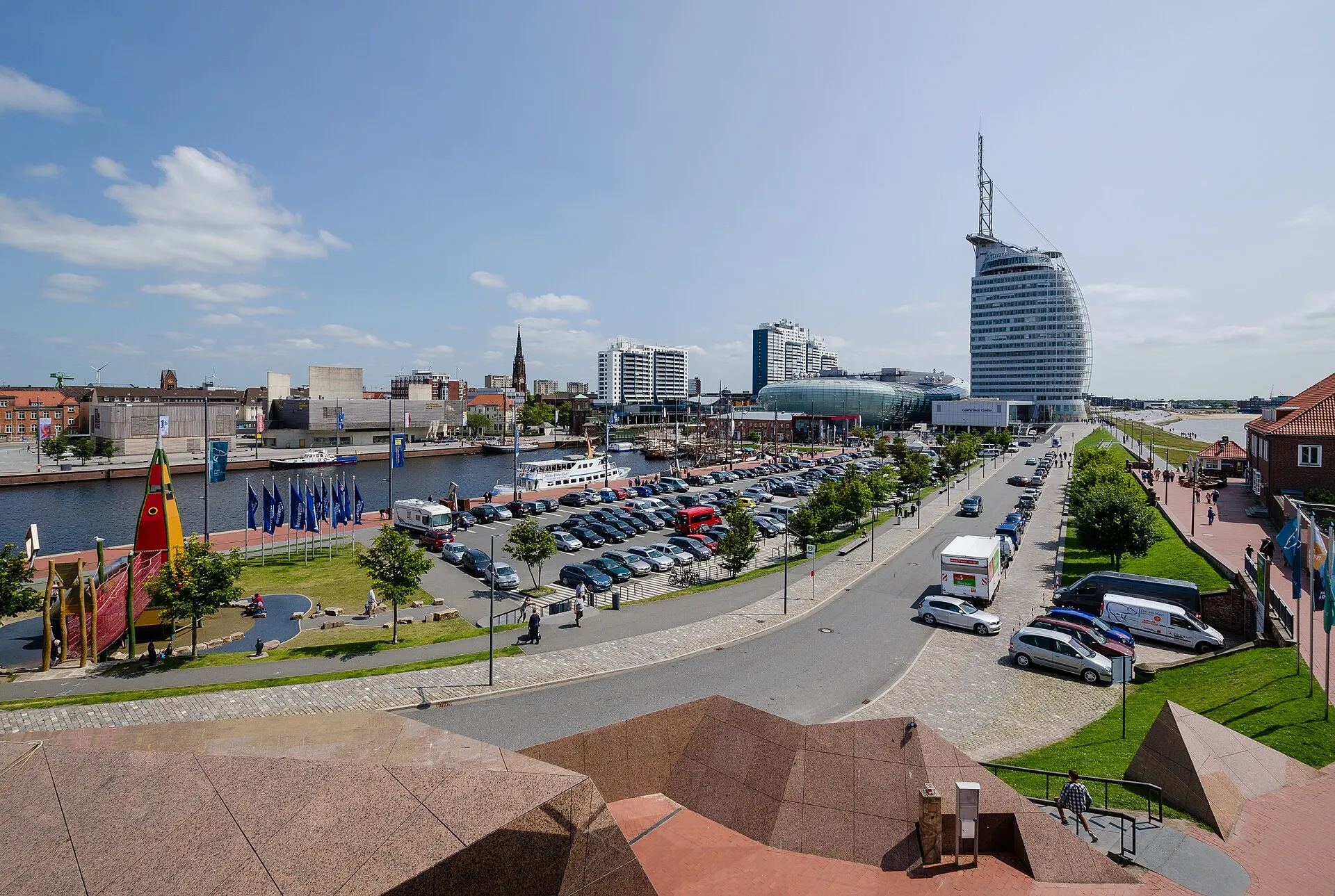
Bremerhaven sits at the mouth of the Weser River, where more than seven million people once boarded ships for a new life across the Atlantic. Today the city pairs that layered emigration history with a remarkable concentration of maritime museums, a medieval shipwreck, and a nature reserve born from an 18th-century flood. It is smaller and quieter than its neighbours, which makes the depth of what is here all the more striking.
20+ researched places in the app
Yes. Parroo is a self-guided audio guide for Bremerhaven: 20 researched places, from German Emigration Center to Bremen Cog and German Maritime Museum, each with a short summary, a full article, and a roughly three-minute audio story in German, English, and French. Buy once, no subscription, no booking. Start whenever you like.
Audio sample: German Emigration Center
Bremerhaven
Places researched in this city
A selection of the 20 places we've researched in this city. The full set is in the Parroo app.
- Maritime museums
- Historic vessels
- Neo-Gothic lighthouse
- Emigration heritage
- Coastal nature reserve
-
01
German Emigration Center
Named European Museum of the Year in 2007, this 4,200-square-metre museum stands on the very quayside where millions of Europeans left for the Americas between 1830 and 1874, making Bremerhaven the largest emigration port on the continent. Its sail-like concrete panels, designed by Andreas Heller, were each cast individually, covering 330 years of migration history across 35,000 objects.
-
02
Bremen Cog
When dredging crews pulled a waterlogged hull from the Weser River in October 1962, they had unknowingly found the first cog ever identified with scientific certainty, a type of ship previously known only from coins and wax seals. Dated by tree rings to around 1380, the 23.2-metre vessel was never finished and never sailed, and it directly sparked the founding of the German Maritime Museum where it now rests.
-
03
German Maritime Museum
Hans Scharoun, best known for the Berlin Philharmonie, designed this museum as one of his final major projects, giving it a flowing organic form that opens onto the Weser. Opened in 1975 by President Walter Scheel, its 8,000 square metres hold more than 60,000 objects spanning centuries of seafaring.
-
04
Simon Loschen Lighthouse
The oldest mainland lighthouse still operating on Germany's North Sea coast was designed by the same architect, Simon Loschen, who also built the city's main church, finished in 1855 in full North German Brick Gothic with stepped gables and crenellations. It guided ships into the Weser through both World Wars without losing its lantern.
-
05
Columbus Quay
Stretching 1,020 metres along the Outer Weser and resting on timber foundations, the Columbuskaje earned the nickname "Quay of Tears" as the last piece of European soil emigrants touched before crossing the Atlantic. Elvis Presley arrived here in 1958, and Queen Elizabeth II departed from it, chapters that now share space with its role as a modern cruise terminal.
-
06
Submarine WILHELM BAUER
Launched in January 1945 and scuttled by its own crew just 100 days later as part of Operation Rainbow, this Type XXI submarine never fired a shot in combat, yet it is the only vessel of its class still open to visitors anywhere in the world. Raised from the seabed in 1957, it served as a West German naval test platform until 1982 before becoming a museum ship.
-
07
Luneplate
This 1,438-hectare wetland reserve only exists because a single Christmas flood in 1717 split an island from the Lower Weser, and it was then diked into the mainland between 1922 and 1924. Water buffalo and Galloway cattle now graze the marshes alongside migratory barnacle geese, and the whole area was transferred from Lower Saxony to Bremen as recently as 2010, partly to offset the ecological footprint of port expansion.
-
08
13 more places to discover
In the Parroo app
Good to know
20 researched places, from the German Emigration Center and the Bremen Cog to lesser-known spots like the Luneplate nature reserve. Each one has a short summary, a full article, and a ~3-minute audio story.
Yes. Every place has a ~3-minute audio story, written from the perspective of a guide standing next to you and produced with premium narration, not the article read aloud.
German, English, and French. Pick whichever you'd rather read or listen in.
No booking, no signup. It's a self-guided walk you start whenever you like. You do need a connection for now to stream the audio and load articles; offline support is something we're still building.
A one-time €4.99 for the whole city, no subscription and no recurring cost. You buy Bremerhaven once and keep access to all 20 places with text and audio.
Open this city in Parroo
Get the full articles, audio stories, and map for this city in the Parroo app. One payment per geography. Yours to keep.
Updated: 2026-09-25