
Coverage Germany
Audio Guide Rügen
app, one-time €4.99
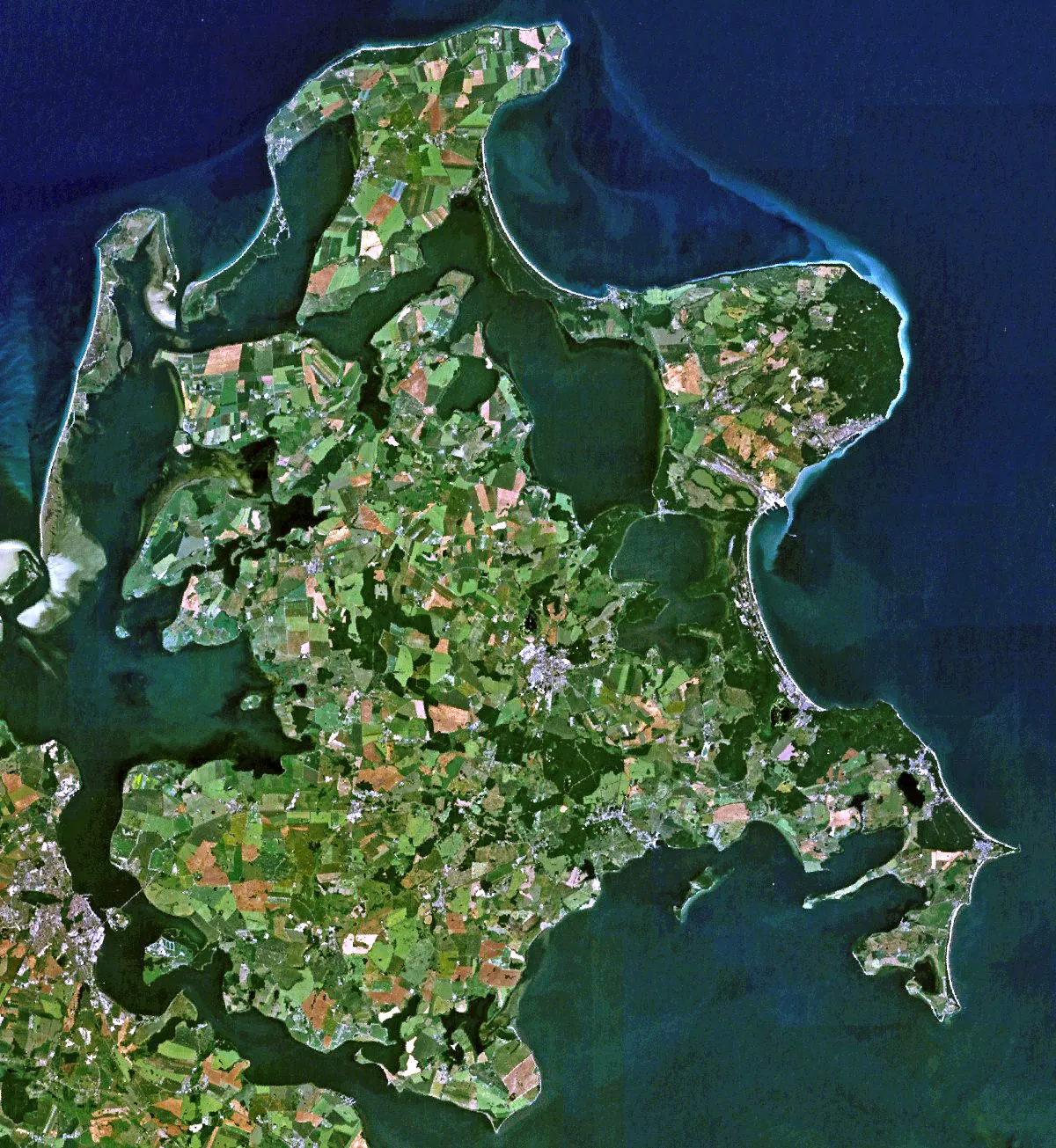
Rügen is Germany's largest island, shaped by towering chalk cliffs, ancient beech forests, and a coastline that stretches from Slavic hillforts to grand 19th-century seaside resorts. The Königsstuhl, a 118-metre cliff of 70-million-year-old chalk, stands at the heart of Germany's smallest national park and draws more than 400,000 visitors a year. Between the Nazi-era colossus at Prora and the car-free calm of Hiddensee, the island layers geological drama with layers of history that most visitors only scratch the surface of.
41+ researched places in the app
Yes. Parroo is a self-guided audio guide for Rügen: 41 researched places, from Königsstuhl to Prora and Cape Arkona, each with a short summary, a full article, and a roughly three-minute audio story in German, English, and French. Buy once, no subscription, no booking. Start whenever you like.
Audio sample: Königsstuhl
Rügen
Places researched in this city
A selection of the 41 places we've researched in this city. The full set is in the Parroo app.
- Chalk cliffs
- Historic seaside resorts
- Slavic heritage
- Hunting lodges
- Narrow-gauge railway
- Island villages
-
01
Königsstuhl
The name 'King's Chair' comes from a legend tied to Swedish King Charles XII, though the chalk itself is 70 million years old. At 118 metres above the Baltic, this cliff in Jasmund National Park now has a 2023-built Skywalk designed specifically to reduce erosion from the 400,000-plus annual visitors.
-
02
Prora
Eight identical concrete blocks stretching 4.5 kilometres along the beach: Prora was designed by the Nazi KdF organisation to house 20,000 holidaymakers simultaneously, and its foundation stone was laid on the third anniversary of the suppression of trade unions as a deliberate propaganda gesture. It was never completed and is now a protected monument.
-
03
Cape Arkona
Long before its two lighthouses existed, Cape Arkona held the Jaromarsburg, a Slavic temple fortress dedicated to the god Svantevit, which drew pilgrims from across the southern Baltic until Danish forces destroyed it in 1168. The chalk and glacial till cliff still rises 43 metres above the sea and draws 800,000 visitors a year.
-
04
Granitz Hunting Lodge
The 38-metre central tower of Jagdschloss Granitz was designed by Karl Friedrich Schinkel, and the whole lodge was built between 1837 and 1846 by Prince Wilhelm Malte I partly to signal Rügen's new status after the island passed to Prussia in 1815. The Putbus family had already owned the Granitz estate since at least 1472.
-
05
Baltic Sea Resort Binz
Binz began as a fishing settlement first recorded in 1318, and its transformation into a seaside resort started in 1830 when the Prince of Putbus set up simple bathing facilities at a lake outflow. Today its 6-kilometre sandy beach, ornate Bäderarchitektur villas, and 370-metre pier define one of the Baltic's most-visited stretches of coast.
-
06
Vitt
Tucked into a coastal gully called the Liete near Cape Arkona and accessible only on foot, Vitt has functioned as a harbour since at least the 10th century, when the Danish chronicler Saxo Grammaticus noted its connection to the Slavic temple at Jaromarsburg. The village's cars are banned and its thatched cottages have been listed as monuments.
-
07
Flint Fields in the Narrow Heath
Between 3,500 and 4,000 years ago, storm surges piled chalk-cliff debris into 14 to 17 parallel ridges of flint, each up to 3.5 metres high, across 40 hectares of the Schmale Heide. The fields have been a protected nature reserve since 1935 and shelter plant species found almost nowhere else on the island.
-
08
34 more places to discover
In the Parroo app
Good to know
41 researched places, from the Königsstuhl and Prora to lesser-known spots like the Flint Fields in the Narrow Heath. Each one has a short summary, a full article, and a ~3-minute audio story.
Yes. Every place has a ~3-minute audio story, written from the perspective of a guide standing next to you and produced with premium narration, not the article read aloud.
German, English, and French. Pick whichever you'd rather read or listen in.
No booking, no signup. It's a self-guided walk you start whenever you like. You do need a connection for now to stream the audio and load articles; offline support is something we're still building.
A one-time €4.99 for the whole city, no subscription and no recurring cost. You buy Rügen once and keep access to all 41 places with text and audio.
Nearby cities
Open this city in Parroo
Get the full articles, audio stories, and map for this city in the Parroo app. One payment per geography. Yours to keep.
Updated: 2026-09-25